 ISI SOLUTIONS
01 / UNDERSTAND
Understand the context.
We start with a concrete problem: bypassed guards, recurring alerts or conditions requiring inspection. We examine the process and available signals with the people responsible for the plant.
SAFETY → PROTECTION
An alarm flags an event. Acting on it requires understanding what happened, on which machine and in what context. ISI connects signals, software and people to turn the alert into an operational response.
 Enlarge image ↗
THE PROBLEM AND OUR WORK
Safety work can address one machine, a production area or the plant, depending on the problem and the information available:
01 / UNDERSTAND
We start with a concrete problem: bypassed guards, recurring alerts or conditions requiring inspection. We examine the process and available signals with the people responsible for the plant.
02 / CONNECT
We configure data collection and software to move from the machine overview to individual signals. The project defines context, alert rules and recipients.
03 / ACT
We connect alerts to an appropriate response: technical inspection, maintenance, training or a process change. ISI coordinates tools and activities; the responsible people assess and carry out the actions.
AN EXAMPLE FROM THE FIELD
In a production environment, some guards were being bypassed to work faster. The alert alone did not explain causes or recurrence.
Machine events were related to the machine, operator, product, cycle and stage. A workflow brings the alert to responsible staff, who distinguish maintenance, behaviour, process and training needs.
Where training is needed, the process includes on-panel content, a questionnaire, learning assessment and records. If digital training is insufficient, on-the-job coaching follows.
The alert becomes part of an intervention process: context helps select the response instead of treating every event in the same way.
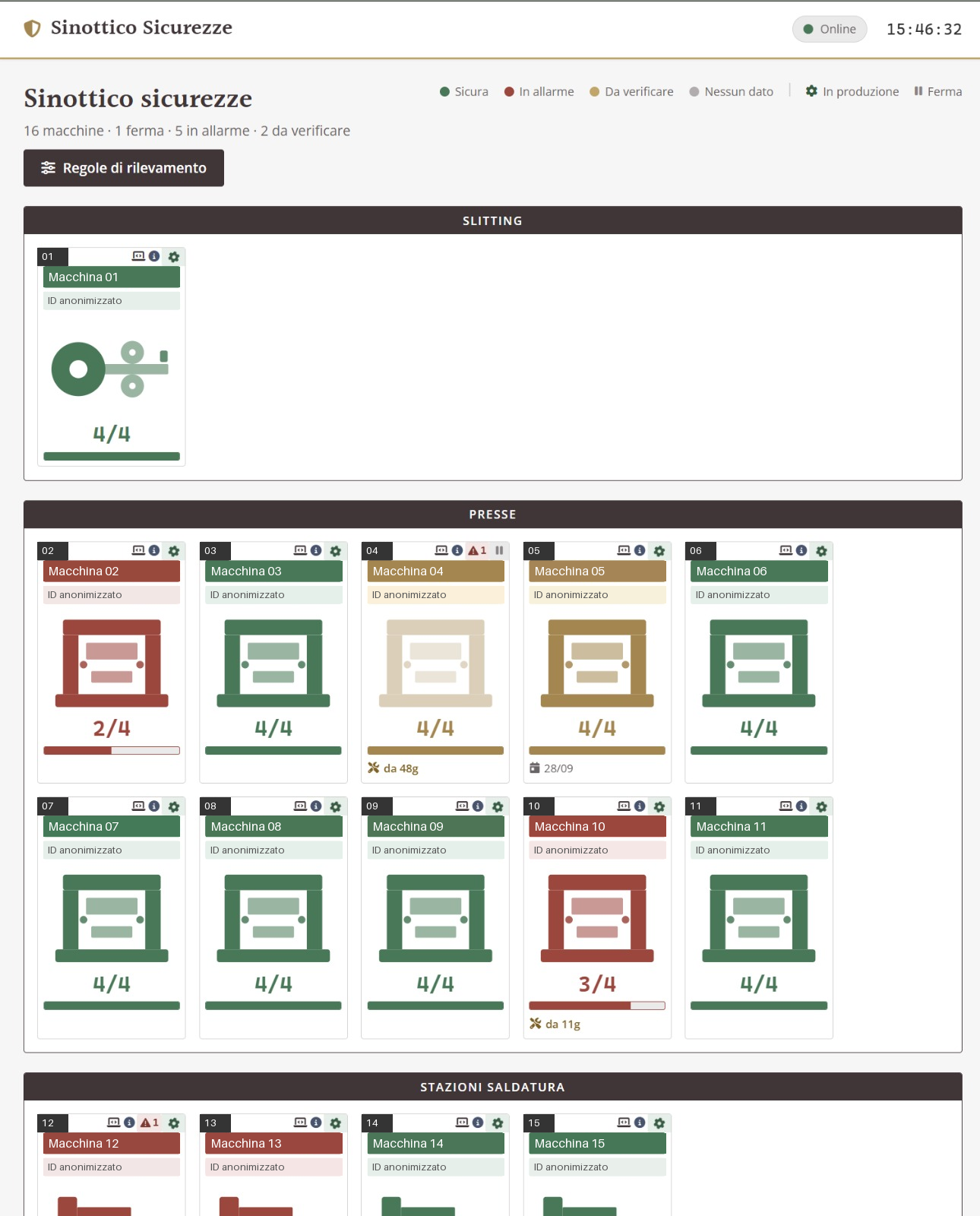
An experience described anonymously. The screenshots show software functions, not measurements of the case outcome.
Read the full caseAVAILABLE TOOLS
HARDWARE / IDEA®
IDEA® is the industrial device developed in partnership by ISI Solutions and Euro Automation. It acquires and processes machine data, connecting it to software through project-defined interfaces including Ethernet, electrical signals and RS485 / Modbus RTU.
It is not required in every plant: where appropriate we integrate PLCs or existing systems directly. IDEA® does not replace safeguards or imply a certified safety function.
IDEA® features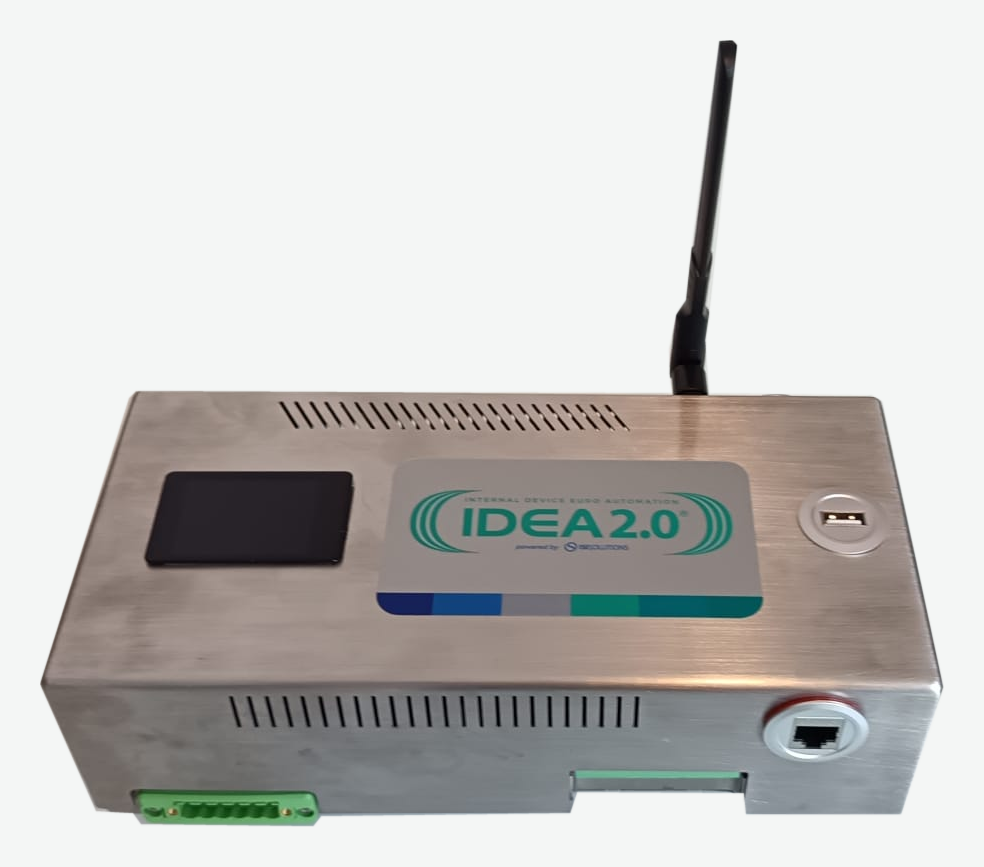
SOFTWARE / OVERVIEW AND ALERTS
The overview brings machine states together. The Machine 02 detail shows electrical signals, alerts and PLC alarm status: a starting point for deciding what to inspect, beyond an indicator’s colour.
Depending on the problem, the process may include workflows for responsible staff, maintenance history, instructions and training. These activities are defined in the project; the screenshot alone does not demonstrate the entire process.
Training and skills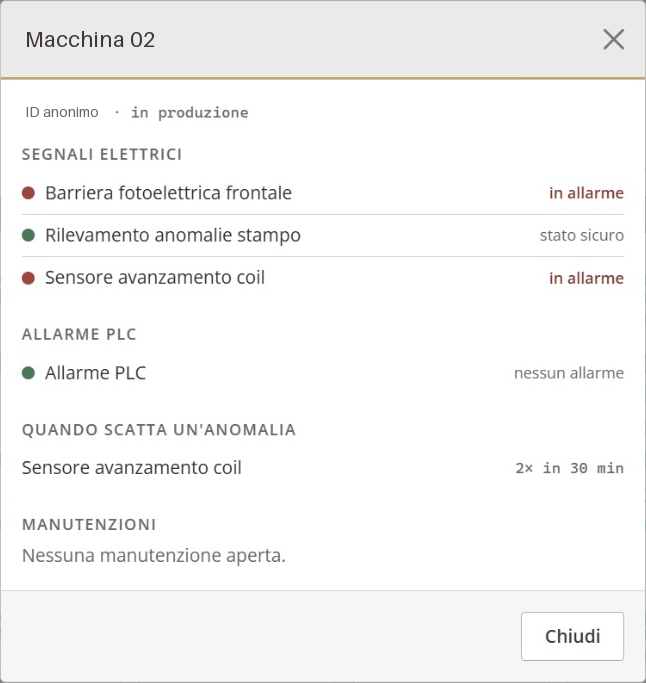 Enlarge image ↗
Machine, signal and context help production and maintenance start from the same information.
Inspection can point to a technical cause, a training need or a process issue.
Interventions and training can be documented to reconstruct what was done and assess next steps.
Scope depends on available signals and the process. Analysis supports risk management: it does not certify overall machine safety or guarantee the elimination of accidents.
THE NEXT STEP
We can start with one machine, a production area or the plant. Tell us what happens, which alerts you receive and which systems you use. The initial discussion identifies available signals, the people involved and the objective, defining the technical and operational scope.